What To Look For In A Wedding Venue: 10 Things to Check
A wedding venue can look beautiful during a tour, but choosing the right one involves much more than the first impression. The space needs to accommodate your guest count, support the flow of your ceremony and reception, work with your vendors, and give you a practical backup plan if the weather changes.
As a wedding photographer, I also pay attention to details couples may not notice immediately, including natural light, portrait locations, getting-ready spaces, and how easily everyone can move between different parts of the venue.
Before signing a contract, here are the key things worth checking during your wedding venue tour.
What Should You Look for in a Wedding Venue?
Before booking a wedding venue, check its capacity, layout, privacy, ceremony and reception spaces, décor, lighting, parking, accessibility, vendor rules, and weather backup options. You should also confirm what is included in the rental fee and whether the venue can comfortably support your wedding-day timeline.
1. Make Sure the Venue Fits Your Guest Count
Before touring wedding venues, have a realistic estimate of how many guests you plan to invite. A venue may advertise a large maximum capacity, but that does not always mean the space will feel comfortable once tables, chairs, bars, entertainment equipment, and a dance floor are in place.
Ask how many guests the venue can accommodate for the exact setup you are considering. If possible, visit when another wedding or event is already set up. Seeing the room furnished gives you a much better idea of how much usable space is actually available.
Think beyond whether everyone technically fits. Guests should be able to move comfortably between tables, reach the bar and restrooms easily, and have enough room to gather on the dance floor.


2. Look at the Layout and Wedding-Day Flow
A good wedding venue should support the natural flow of the day rather than make each transition feel complicated.
As you walk through the space, imagine where the ceremony, cocktail hour, dinner, dancing, and other key moments will happen. Consider how guests will move from one area to another and whether any transitions require long walks, stairs, or waiting while a room is being rearranged.
If your ceremony and reception are in the same venue, ask whether they take place in separate spaces or whether the venue needs to flip one room between events.
From a photography perspective, smooth transitions also matter because unnecessary travel or room changes can take time away from portraits and other parts of the wedding day.


3. Decide How Much Privacy You Want
Some wedding venues host more than one event at a time, while others offer exclusive use of the property.
Neither option is necessarily better, but it is worth knowing what to expect before booking.
Ask whether your guests may share entrances, hallways, restrooms, outdoor spaces or portrait locations with another event. If the venue is open to the public, such as a garden, museum or park, find out whether visitors will still have access during your wedding.
Some couples are perfectly comfortable with a shared or public setting. Others prefer a more private atmosphere where the wedding party and guests have the space to themselves.
Knowing how important privacy is to you can help narrow down your choices early.


4. Check the Ceremony and Reception Options
If you plan to hold both your ceremony and reception at the same venue, look carefully at how each part of the day will work.
Ask to see the ceremony location, cocktail-hour area, and reception space rather than focusing only on the main ballroom.
Find out whether the ceremony space changes depending on the season or weather and whether guests need to move through the reception room while vendors are completing setup.
If a room flip is required, ask how long it normally takes and where guests will spend that time.
Having clearly defined spaces for each part of the day can make the wedding feel more organised and can also help keep the timeline running smoothly.


5. Ask About the Weather Backup Plan
An outdoor ceremony, garden cocktail hour, or rooftop reception may be one of the main reasons you love a venue, but always ask what happens if the weather does not cooperate.
Do not settle for simply hearing that the venue has a rain plan. Ask to see the actual backup space.
Consider whether it can comfortably accommodate your full guest count and whether you would still be happy holding your ceremony or reception there if needed.
Also ask when the venue makes the final decision to move an event indoors and who is responsible for communicating that decision to vendors.
A strong backup plan means you can choose an outdoor venue without depending entirely on perfect weather.


6. Pay Attention to Lighting and Photo Locations
A venue can look beautiful during a tour but photograph very differently depending on the available light and where portraits can realistically take place.
Look at the getting-ready rooms, ceremony space, reception room, and outdoor areas. Large windows and natural light can be useful, but they are not the only things that matter. A good venue should also have practical indoor options in case the weather changes.
Consider whether there is enough space for family portraits and wedding-party photographs without blocking guest traffic.
It is also worth asking whether certain rooms, staircases, terraces, or gardens have time restrictions or require special permission for photography.
As a photographer, I also pay attention to how far these portrait locations are from one another. A beautiful photo location is much less useful if getting there takes a large portion of the wedding timeline.


7. Consider the Existing Décor and Style
Every venue already has its own architectural style, color palette, and furnishings.
Rather than looking for a completely neutral space, choose a venue whose existing character works with the atmosphere you want for your wedding.
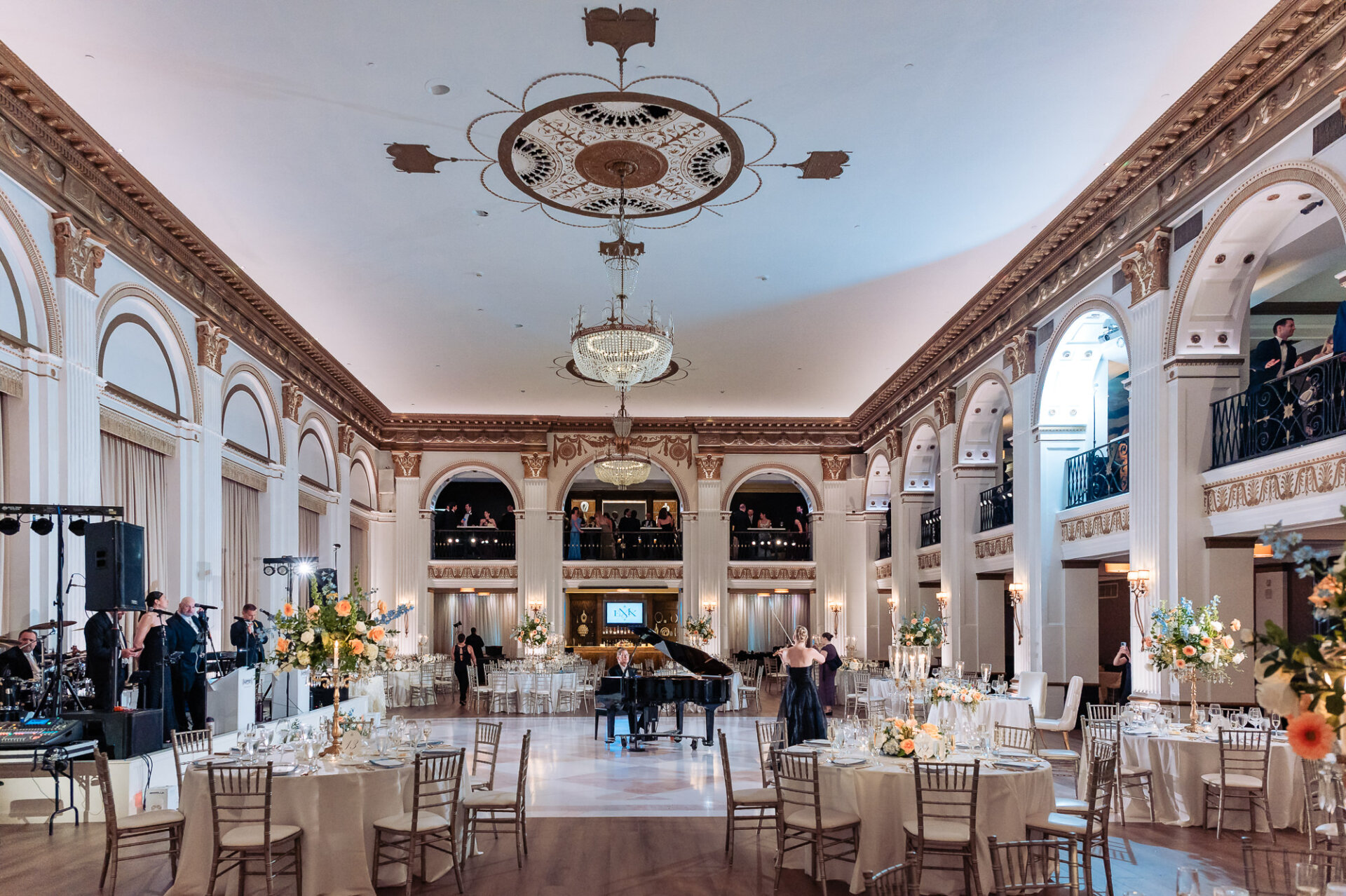
A historic ballroom, modern hotel, garden venue, and industrial space will each create a very different backdrop even before flowers, linens, and other décor are added.
Pay attention to flooring, walls, lighting fixtures, chairs, and permanent architectural details. If you find yourself planning to cover or completely change most of what is already there, another venue may be a better fit.
Choosing a space you already like can also reduce the amount of additional décor needed.


8. Check Parking, Transportation, and Accessibility
Think about how your guests will actually arrive at the venue and move through the property once they get there.
Ask whether parking is available onsite, whether valet service is offered, and whether there are additional parking fees. For city venues, check how close the venue is to hotels, public transportation, and rideshare pickup areas.
If guests will be travelling between a hotel, ceremony, and reception venue, consider whether you may need to arrange shuttle transportation.
Accessibility matters too. Ask about elevators, ramps, accessible entrances, and restroom access, particularly if you have elderly guests or guests with mobility needs.
These details may not be the most exciting part of choosing a venue, but they can make a noticeable difference to your guests’ comfort.


9. Ask What Is Included and What Has Restrictions
Before comparing venue prices, make sure you know exactly what each rental fee includes.
Some venues provide tables, chairs, linens, catering, bar service, and staff, while others provide only the space and require couples to arrange most rentals separately.
Ask whether the venue has a preferred or required vendor list and whether outside caterers, florists, entertainment companies or other vendors are permitted.
You should also ask about restrictions involving candles, confetti, décor installation, amplified music, and room access.
Confirm when vendors are allowed to begin setup, when everything must be removed, and whether additional hours carry extra fees.
These details can significantly affect both the final cost and the way you plan the day.


10. Think About the Full Wedding-Day Timeline
A venue should work for more than the ceremony and reception. Consider how it supports the entire wedding day from preparation through the final exit.
If you plan to get ready onsite, look at the preparation spaces and ask when you can access them. Think about where a first look would take place, where family and wedding-party portraits can happen, and whether travel is required between those locations.
Also confirm when the ceremony space becomes available, how long the cocktail hour lasts, and what time the reception must end.
From a photography standpoint, unnecessary travel and tight transitions can reduce the amount of time available for portraits or candid coverage.
A venue that works naturally with your timeline can help the day feel less rushed and give you more flexibility when plans change.


Wedding Venue Tour Checklist
It is easy to get caught up in the look and feel of a venue during a tour, so having a checklist can help you stay focused on the details that will affect the wedding day.
Use this as a quick reference while comparing venues:
- Confirm the comfortable guest capacity for your preferred layout.
- Ask where the ceremony, cocktail hour, and reception will take place.
- Find out whether another event may be happening at the same time.
- See the actual rain or weather backup space.
- Check the getting-ready rooms for space, lighting, and privacy.
- Look for both indoor and outdoor portrait locations.
- Ask whether any photography areas have time limits or access restrictions.
- Check parking, valet options, shuttle access, and nearby hotels.
- Confirm accessibility for guests who may need ramps or elevators.
- Ask what tables, chairs, linens, rentals, and staffing are included.
- Find out whether you must use preferred or required vendors.
- Ask about décor, candles, music, and noise restrictions.
- Confirm when vendors can begin setting up.
- Ask what time the reception must end.
- Review any overtime, cleanup, or additional rental fees.
- Consider how easily guests will move from one part of the venue to another.
- Make sure the venue works with your overall wedding-day timeline.
You do not need every venue to check every possible box. The goal is to identify which details matter most to you and make sure there are no surprises after the contract is signed.
Questions to Ask Before Booking a Wedding Venue
Once you have narrowed down your choices, ask a few more detailed questions before making the final decision. Some of these may already be covered in the contract, but it is still worth discussing them during the venue tour.
Here are a few questions to bring with you:
- What are the maximum and recommended guest capacities for our preferred setup?
- Will we have exclusive use of the venue?
- Are the ceremony, cocktail hour, and reception held in separate spaces?
- What happens if the weather changes?
- Can we see the indoor backup space?
- What is included in the rental fee?
- Are there additional service, staffing, cleanup, or overtime charges?
- Are there required caterers or preferred vendors?
- Can we bring in our own photographer, florist, DJ, band, or other vendors?
- What time can vendors begin setup?
- How early can the wedding party access the getting-ready rooms?
- Are there restrictions on candles, confetti, décor, music, or photography?
- Where can family and wedding-party portraits take place?
- Is parking available onsite?
- Is the venue accessible for guests with mobility needs?
- Are there nearby hotels or transportation options?
- What time must the reception end?
- What is the cancellation or postponement policy?
Do not feel like you are asking too many questions. A venue is one of the biggest decisions you will make during wedding planning, and you should feel comfortable with how the space will actually work before committing.
Philadelphia Wedding Venue Resources


If you are planning a wedding in Philadelphia or the surrounding area, I have photographed celebrations at a wide range of venues, from historic ballrooms and hotels to gardens, estates, museums, and modern event spaces.
You can browse my Philadelphia Wedding Venues guide to compare locations and see how different spaces look during real weddings.
If you already have a few venues in mind, take a look at the individual venue guides and wedding galleries as well. Seeing a venue during an actual wedding can give you a much better sense of the lighting, room layout, portrait locations, and overall atmosphere than an empty-room tour alone.
And if photography is an important part of your venue decision, feel free to reach out. I am always happy to share what I have noticed from photographing weddings at different Philadelphia venues.
FAQs About Choosing a Wedding Venue
1. What should I look for when touring a wedding venue?
2. How do I know if a wedding venue is big enough for my guest list?
3. What should I ask before signing a wedding venue contract?
4. What should I look for in a wedding venue from a photography perspective?
5. Why is working with an experienced photographer familiar with premium venues important during the venue selection process?
From the First Look to the Last Dance, Let Us Tell Your Love Story