
8 Common Wedding Planning Mistakes to Avoid
After photographing hundreds of weddings, I’ve seen how small planning decisions can have a much bigger effect once the wedding day begins.
The mistakes that cause the most problems usually are not about choosing the wrong flowers or forgetting a decorative detail. They are things like building a timeline with no breathing room, inviting more guests than the venue comfortably holds, overlooking travel time, or trying so hard to make everything perfect that you barely get to enjoy the day.
You cannot plan for every possible delay or change, and you do not need to. But avoiding a few common wedding planning mistakes can make the day feel much calmer and give you more time to be present with the people you invited to celebrate with you.
What Are the Most Common Wedding Planning Mistakes?
Some of the most common mistakes are:
- Booking major vendors before confirming your budget and approximate guest count
- Building a wedding-day timeline with no buffer
- Inviting more guests than the venue can comfortably accommodate
- Overlooking travel time between locations
- Forgetting how early sunset may affect portraits
- Not deciding how you want guests to handle phones during the ceremony
- Trying to fit too many portrait locations into one day
- Expecting every part of the wedding to go exactly as planned
The more realistic your plan is, the easier it is to adjust when something changes.
Mistake #1: Booking Before You Know Your Budget and Guest Count
It is tempting to start booking the parts of the wedding you are most excited about right away. But before committing to a venue or major vendors, it helps to know two things:
How much are you comfortable spending?
and
Roughly how many people do you expect to invite?
Those numbers affect almost everything that follows. A venue may look perfect until you realize it does not comfortably fit your guest count. A catering package may seem manageable until you calculate the cost for the number of people you plan to invite.
Start with a realistic budget, an approximate guest count, and a conversation about your priorities as a couple. Then move into the major decisions. That usually gives you a much clearer framework for the rest of the planning process.
Mistake #2: Setting a Budget After You Start Booking
A wedding budget is much easier to work with before contracts and deposits start adding up. Talk with your partner and anyone else who has offered to contribute financially.
It helps to know:
- Your overall spending limit
- Who is contributing
- Whether contributions are fixed amounts or tied to specific expenses
- Which parts of the wedding matter most to you
- Which areas you are comfortable spending less on
You do not need every number finalized before making your first booking. But you should have a good idea of what you can realistically spend. It is also worth leaving some room for costs that appear later. The goal is not to control every dollar perfectly. It is to avoid reaching the middle of planning and realizing that the remaining budget no longer matches the wedding you are building.

Mistake #3: Building a Wedding-Day Timeline With No Buffer
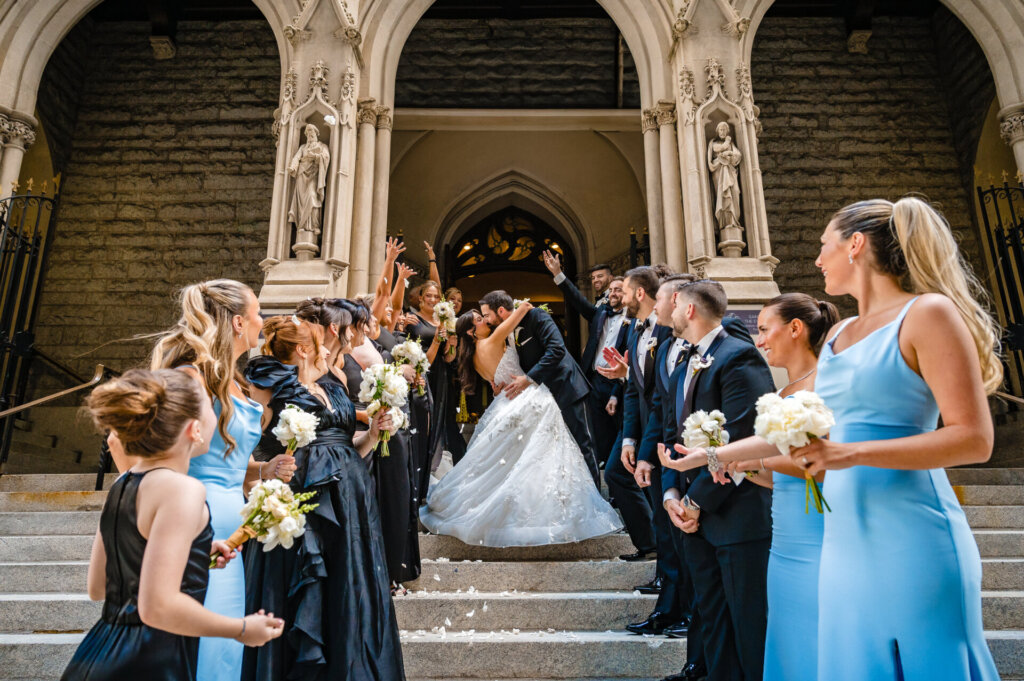
This is one of the planning issues I see affect wedding days most often. A timeline can look great on paper and still be too tight in practice.
- Hair and makeup may run late.
- Someone may take longer to get dressed.
- Traffic may be heavier than expected.
- A family member may disappear just before portraits.
- The ceremony may start a few minutes late.
None of those things are unusual.The problem starts when the schedule only works if every single part of the day happens exactly on time. A little buffer can make a big difference. From a photography standpoint, it gives us more room for real moments instead of rushing from one planned item to the next.
When the timeline is too tight, something usually gets squeezed. Often that means portraits, family photographs, or quiet time before the ceremony. A realistic timeline should allow for normal delays without making the whole day feel behind.


Mistake #4: Inviting More Guests Than Your Venue Can Handle
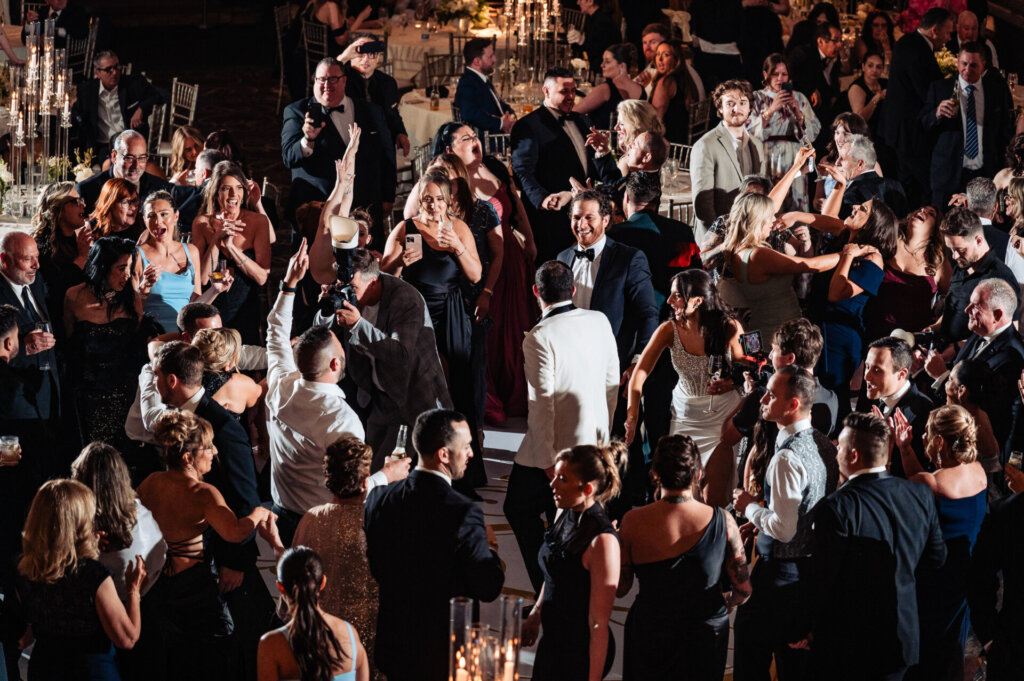
Do not build your guest list around the assumption that a certain percentage of people will decline. You may receive more yes responses than expected. Your first invitation group should still fit comfortably within the venue’s capacity and the budget you have planned.
That means looking at more than the venue’s absolute maximum. Think about whether the space still feels comfortable once tables, a dance floor, entertainment, décor, and other elements are in place. Guest count also affects how the day moves.
More people means more time for entrances, seating, family photographs, dinner service, and transitions. If your venue or budget only works when a large number of invited guests decline, the plan is probably too tight from the beginning.

Mistake #5: Not Thinking About Phones During the Ceremony
You do not have to have an unplugged ceremony. But you should decide how you feel about phones before the ceremony begins. I have photographed plenty of ceremonies where guests lean into the aisle with a phone or tablet as the bride walks toward the altar.
I have also had brides ask afterward whether those phones could be removed from the photographs. In many cases, the answer is no. If you want guests to put their devices away, you can ask the officiant to make a short announcement before the ceremony or use a simple sign near the entrance.
If you are comfortable with guests taking photographs, that is completely fine too. The mistake is not making that decision until after you see the photographs.


Mistake #6: Trying to Fit Too Many Locations Into the Wedding Day
Philadelphia gives us no shortage of great places for wedding portraits. That does not mean we need to visit all of them. Every location change takes time. You have to gather the wedding party, get everyone into transportation, travel, park or unload, walk to the location, take photographs, and then do it again.
More locations do not automatically give you more variety. Sometimes they simply give you more time in traffic. I would rather have enough time to photograph you well at one or two strong locations than rush through three or four because we are trying to fit too much into the schedule.
When choosing portrait locations, think about how they fit into the wedding day as a whole. A great location is less useful if getting there creates stress or takes too much time away from everything else.


Mistake #7: Forgetting About Sunset When Building the Timeline
Sunset changes throughout the year, and it can have a big effect on portrait options. A summer wedding may have plenty of daylight after the ceremony. A late-fall or winter wedding may not. If you want outdoor portraits, city photographs, or a few images around sunset, that needs to be considered before the timeline is finalized.
This matters even more when the ceremony and reception are in different locations. Travel time can quickly use up the remaining daylight. I always recommend discussing the season and expected sunset time with your photographer while the schedule is being developed.
That does not mean every portrait has to happen during golden hour. It simply means knowing how much daylight you actually have instead of assuming it will still be there.
Mistake #8: Trying to Make Every Part of the Wedding Perfect
I have photographed hundreds of weddings, and I have never seen one where every single thing went exactly according to plan.
That is normal.
- A button breaks.
- Weather changes.
- Someone runs late.
- A flower falls out of a bouquet.
- The schedule shifts.
- A small detail is forgotten.
Most of those things matter far less than they feel like they do in the moment. Trying to make every part of the wedding perfect can make it harder to enjoy what is actually happening. Plan carefully, but leave some room for the day to be a real day.
If something small changes, it does not mean the wedding is ruined. Sometimes the moments you never planned become some of the photographs you remember most.
What Wedding Planning Mistakes Affect Photography the Most?
Some planning problems affect photography more directly than others. These are the ones I see most often:
Hair and Makeup Finishing Late
If getting ready runs behind, the delay usually moves into everything that follows. That may shorten the time available for portraits, a first look, or family photographs. Give hair and makeup enough room in the schedule so the finish time is not the exact moment everyone needs to leave.
Too Little Time for Portraits
Wedding portraits do not need to take over the day. But they still need enough time to happen without rushing. That includes photographs of the couple, wedding party, and family.
Too Many Portrait Locations
A short list of well-chosen locations usually works better than trying to cover every landmark in the city. Travel time is still part of the photography timeline.
Long Travel Between Wedding Locations
Getting-ready location, ceremony, portrait spots, and reception venue may all be in different places. Each transition needs realistic travel time.
Ceremony Timing That Leaves No Daylight
This matters most during fall and winter when the sun sets earlier. If outdoor portraits matter to you, the ceremony time should be considered alongside the available daylight.
Family Members Not Knowing When Portraits Are Happening
Family photographs move much more smoothly when the people needed for them know where and when they are expected. Searching for one person can take longer than the photograph itself.
Phones Blocking the Ceremony Aisle
Guests using phones are not always a problem. But when several people lean into the aisle at once, they can become a permanent part of the photograph. Thinking about this before the ceremony gives you more control over what you want.
Check Marriage License Requirements Early
Marriage license requirements vary depending on where you are getting married. Do not rely on advice from another state, another couple, or an old blog post. Check directly with the city, county, or state authority responsible for marriage licenses where your ceremony will take place.
Confirm:
- How and where to apply
- Identification requirements
- Application deadlines
- Waiting periods, if any
- How long the license remains valid
- Fees
- Who is legally allowed to officiate
This is one of those tasks that may not be as exciting as choosing flowers or tasting cake, but it is worth handling early enough that it does not become a last-minute problem.
Give Your Wedding Day Room to Breathe
The best wedding plans are not necessarily the ones with the most activities. They are the ones that give people enough time to move through the day without constantly feeling behind. If you can simplify something, simplify it.
If two portrait locations give you everything you want, you probably do not need four. If you can leave an extra fifteen minutes between two parts of the day, use it. If a small detail does not go according to plan, let it go when you can. The wedding will move quickly enough on its own. A little room in the schedule gives you more opportunity to actually be there for it.
FAQs
1. What are the biggest wedding planning mistakes couples make?
2. How can we avoid wedding-planning pitfalls like unrealistic timelines and still get high-end photography coverage?
3. What vendor coordination mistakes commonly impact luxury wedding photography, and how do we prevent them?
4. How important is budgeting and guest-flow planning to ensure your wedding day photos don’t suffer?
5. If we’ve already made some planning mistakes, can we still salvage our wedding day photography?
6. Should we have an unplugged wedding ceremony?
7. What happens if something goes wrong on the wedding day?
Elevate Your Wedding Day Memories—Explore Our Signature Experience


