
Wedding Detail Photos Checklist: What to Have Ready for Your Photographer
Wedding detail photos usually happen early in the day while you are getting ready, which means a little preparation goes a long way. If your rings are with one person, your invitation is packed in another bag, and your shoes are still in a box across the room, we spend valuable time looking for everything instead of photographing it.
The easiest approach is to gather the items you want photographed before the wedding day and keep them together.
That can include your rings, invitation suite, shoes, jewelry, vow books, perfume or cologne, heirlooms, and any personal details that mean something to you. You do not need to include everything on a checklist. The goal is to photograph the pieces that are actually part of your wedding and worth remembering.
Why Wedding Detail Photos Matter
Wedding detail photos are close-up or styled photographs of the smaller items that help document your wedding day. They can include your rings, invitation suite, wedding attire, jewelry, shoes, flowers, vows, gifts, heirlooms, and other personal items. I also photograph details beyond the getting-ready portion of the day, including ceremony décor, reception spaces, florals, place settings, signage, and other parts of the wedding design.
These photographs may seem small compared with portraits or ceremony moments, but many of the items only appear briefly during the day. An invitation may be packed away once the wedding begins. A vow book may only be used for a few minutes and jewelry may disappear underneath a veil or jacket. But photographing those details gives you a record of things you may not otherwise see clearly in the final gallery.


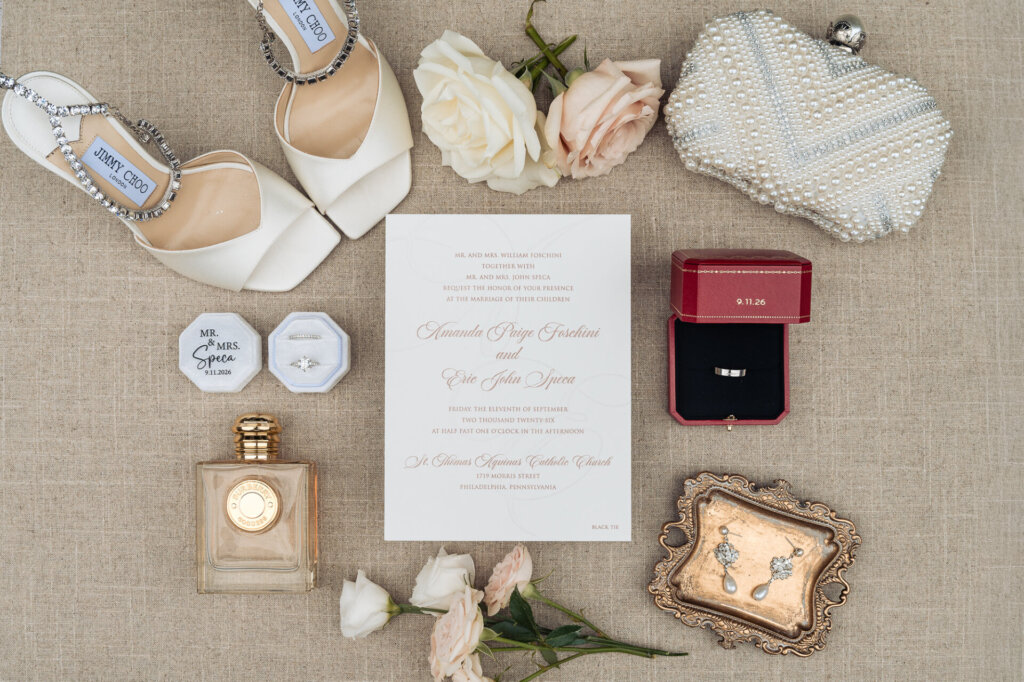
The Bride’s Essentials
Every detail is important, from the dress and veil to the invitation suite and cherished jewelry items. Your rings, bouquet, vow book, and personal touches encapsulating “something old, new, borrowed, blue” contribute to the narrative. Ensuring these items are ready and collected in one place streamlines our process and guarantees a seamless wedding photography session.
- ALL 3 rings – if all 3 are with you, your photo team will be able to photograph the full set. We’ll have time to get them to whoever will be holding them afterward.
- Dress and veil
- Shoes
- Jewelry
- Bouquets and/or loose florals – most florists are great about giving you a few loose flowers/greenery for styling details. You can’t assume they’ll do it unless you ask. Also, make sure these florals arrive by the time that these detailed photos will be taken.
- Invitation suite (2 copies of the full suite, if possible)
- Something old, new, borrowed, blue
- Perfume
- Vow book
- Any extra ribbon, accents, or items of significance that represent the day
- Any gifts or notes from one another
- Guest welcome bags or favors


Groom’s Detail Photo Essentials
For grooms, it’s about showcasing the tailored elegance. Suits, ties, cuff links, and all the finer elements like boutonnieres and vow books add depth to the visual story. Just like with the bride’s items, consolidating these essentials ensures we can focus on creating stunning imagery.
- Invitation suite (2 copies of the full suite, if possible)
- Boutonniere
- Suit
- Tie
- Shoes and socks
- Cufflinks
- Watch
- Cologne
- Handkerchief
- Belt/suspenders
- Vow book
- Ribbons, accents, or anything special that represents the day
- Any gifts or notes from one another
- Guest Welcome Bags or Favors


Wedding-Day Extras
You may also want photographs of:
- Welcome bags
- Wedding favors
- Custom ribbon
- Ring dishes
- Personalized hangers
- Small decorative pieces
- Custom boxes
- Items created specifically for the wedding
Again, you do not need to gather things simply because they appear on a checklist. If they are already part of your day and you want to remember them, include them.
Put Your Wedding Details in One Place
One of the easiest things you can do before the wedding is gather the smaller detail items together. A box, tote, or bag works well.
You might keep your:
- Rings
- Jewelry
- Shoes
- Invitation suite
- Vow books
- Perfume or cologne
- Letters
- Gifts
- Heirlooms
- Other small accessories
all in one place.
Larger items such as the dress, suit, bouquet, and veil can stay separate. The goal is simply to avoid having ten people search through different bags once photography begins.
It also helps to decide who will have the rings after I finish photographing them. The wedding bands usually need to go to whoever is responsible for them before the ceremony, so knowing that ahead of time keeps the handoff simple.
You Don’t Need to Buy Props for Wedding Detail Photos
There is no need to purchase trays, ribbons, boxes, or decorative pieces just because you have seen them in wedding detail photographs online. If they are already part of your wedding, that is different. But I would rather photograph six items that actually belong to your day than a table full of things bought only to fill a photograph.
Your invitation, rings, shoes, flowers, heirlooms, and personal items already tell me plenty about the wedding. The details should reflect your day rather than look like a flat lay created for someone else’s wedding.
Ask Your Florist for a Few Loose Flowers
If you like the look of flowers or greenery in detail photographs, talk with your florist before the wedding. A few loose stems or pieces of greenery can sometimes be used alongside the invitation suite, rings, or jewelry. Most florists are happy to help when they know ahead of time, but I would not assume extras will automatically be available.
Timing matters too.
If the loose flowers arrive after the getting-ready detail photographs are finished, I cannot use them in those images. Ask your florist whether they can include a small amount of loose material with the bouquet delivery.
What Happens to the Rings After Detail Photos?
If all three rings are with you at the start of the day, I can photograph the full set together. Afterward, they need to go back to the people who will be responsible for them during the ceremony. That is why it helps to know in advance who should receive each ring.
I do not want something that important sitting on a table or getting mixed back into a bag. Once the photographs are finished, we can make sure the rings are returned to the right person so they are where they need to be later.
How I Prepare for Wedding Detail Photos
About 90 days before the wedding, I send my couples a questionnaire. We then review the answers together by phone. That conversation helps us go through the wedding-day timeline, locations, and the information I need before photography begins. It is also a good time to confirm where important items such as the rings will be at the start of the day.
The goal is not to create a rigid plan for every photograph. It is to make sure I know what is happening, where people will be, and whether there are personal details I should pay attention to. That preparation means I can arrive with a clear picture of the day instead of trying to collect all of that information while everyone is getting ready.
How Much Time Do Wedding Detail Photos Take?
There is no single amount of time that works for every wedding. It depends on how many items you want photographed, how they are organized, the getting-ready location, and what else is happening when photography begins. If everything is already together, the process moves much more easily.
If we need to search for rings, find an invitation, wait for flowers, or locate accessories in several rooms, it naturally takes longer. That is another reason I recommend gathering the smaller details beforehand. I would rather spend photography time making photographs than searching through luggage.
Wedding Details Go Beyond Rings and Invitations
Getting-ready details are only one part of what I photograph. Later in the day, I also document the ceremony and reception spaces.
That can include:
Ceremony Details
- Ceremony setup
- Aisle
- Altar or chuppah
- Florals
- Programs
- Reserved seating
- Signs
- Cultural or religious details


Whenever possible, I like to photograph the ceremony space before guests fill it. That gives you a clear record of how everything looked after the planning and setup were finished.
Reception Details
Reception photographs may include:
- Full room
- Tablescapes
- Centerpieces
- Place settings
- Escort cards
- Menus
- Table numbers
- Cake
- Florals
- Signage
- Sweetheart table
- Dance floor
- Custom décor
These images document another part of the day that can change quickly once guests enter the room. A fully set reception space may only exist in that untouched form for a short period.
What Makes a Wedding Detail Worth Photographing?
It does not need to be expensive or need to be custom-made. And it does not need to look like something from a wedding magazine. If it matters to you, it may be worth photographing.
I have photographed everything from designer shoes and custom stationery to handwritten letters, family heirlooms, religious pieces, cultural objects, and small personal references that only the couple fully recognizes. Those details give the gallery personality. They remind you that this was your wedding rather than simply a beautifully decorated event.
Preparing Your Wedding Details Before the Day
The simplest thing you can do is decide what you care about before the wedding morning arrives. Put the smaller items together. Save a complete invitation suite. Ask your florist about loose flowers if you want them. Make sure the rings are available. And tell me when something has a story behind it.
You do not need to create a large collection of objects for me to photograph. A few meaningful details are enough. The purpose of these photographs is not to make your wedding look more elaborate than it was. It is to document the pieces you chose, used, wore, carried, and cared about while they are all still part of the day.


FAQs: What to Include in Wedding Detail Photos
1. What qualifies as a “detail photo” on our wedding day?
2. What items should we gather ahead of time for our detail photo session?
3. How much time should we allocate in our wedding-day timeline for detail photography?
4. How do we prepare the space and lighting for superb detail photos?
5. How do detailed photos contribute to our wedding-day story and final gallery?
Secure Your Wedding Date With Philadelphia’s Most Sought-After Wedding Photographer


