10 Most Beautiful Historic Churches in Philadelphia for Weddings
Philadelphia’s historic churches offer some of the most breathtaking wedding venues on the East Coast, combining centuries-old architecture with timeless romance. From ornate Gothic Revival cathedrals to intimate colonial-era chapels, these sacred spaces provide the perfect backdrop for couples seeking a meaningful ceremony steeped in history and elegance. Whether you envision saying your vows beneath soaring vaulted ceilings, surrounded by stunning stained glass windows, or within the warm embrace of a charming neighborhood parish, Philadelphia’s diverse collection of historic churches caters to every wedding style and size.
Discover the ten most beautiful historic churches in Philadelphia, where love stories have unfolded for generations, each offering unique character, exceptional beauty, and the sacred atmosphere that makes church weddings truly unforgettable.
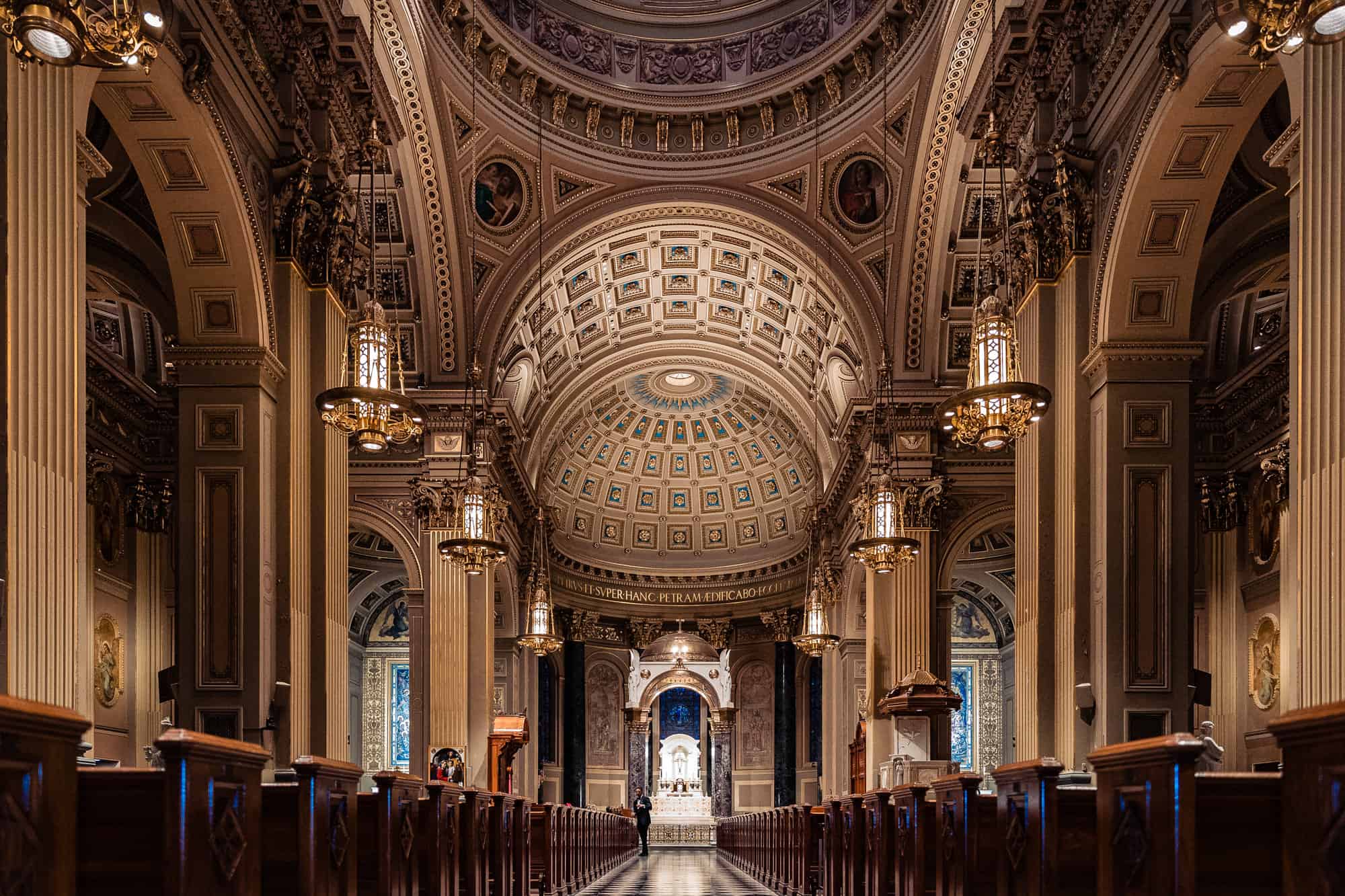
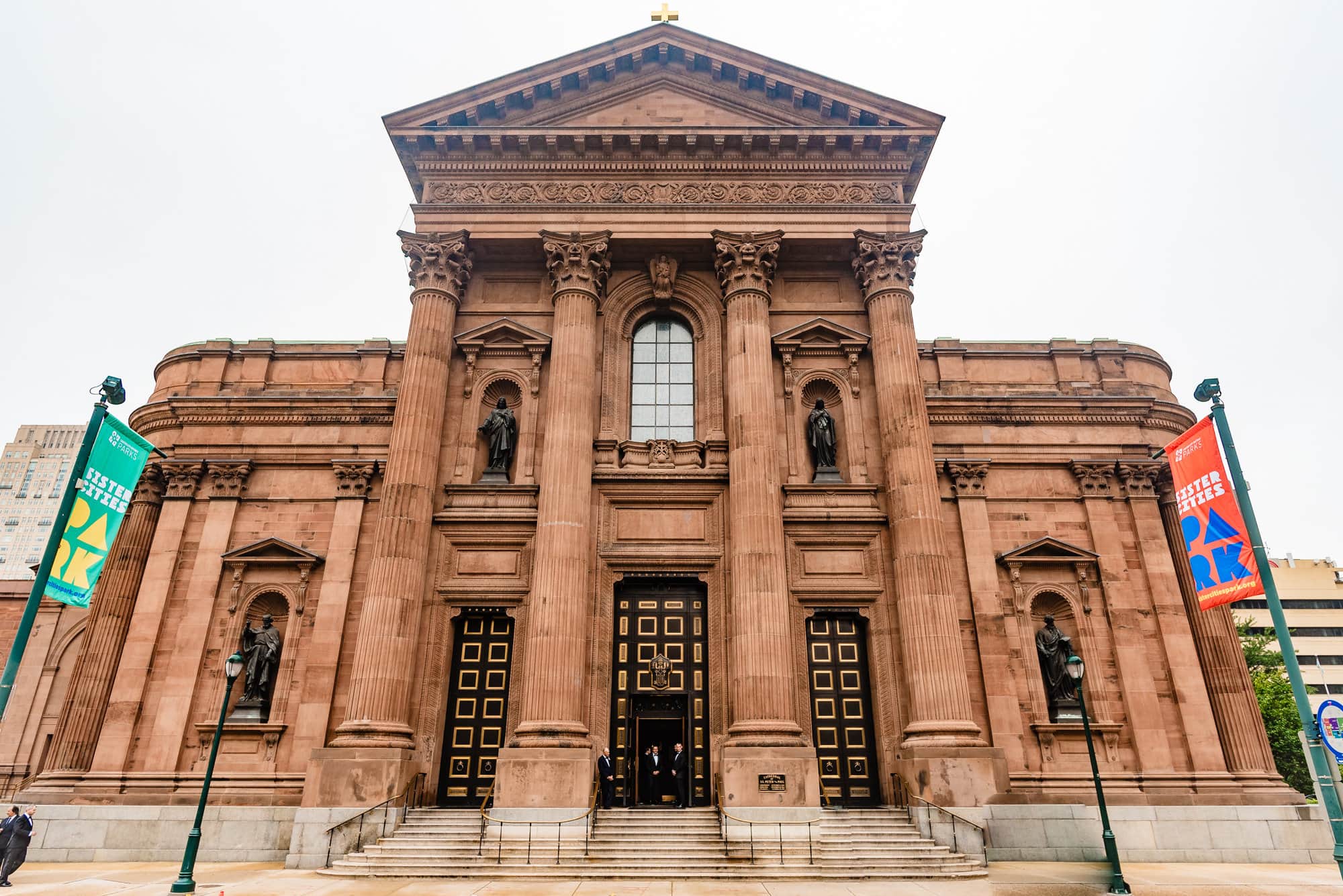
Cathedral Basilica of Saints Peter and Paul
Located at 1723 Race Street, the Cathedral Basilica of Saints Peter and Paul functions as the mother church of the Philadelphia Catholic Archdiocese. In contrast to being one of the best and largest Catholic churches in the United States, this magnificent church would be ideal for your intimate wedding. You would be able to invite all of your relatives and friends, as the cathedral can accommodate more than 2,000 guests.
This cathedral at the intersection of 18th Street and Benjamin Franklin Parkway in Center City was completed in 1864 under the direction of architect Napoleon LeBrun. It is where the yearly Red Mass for Catholic lawyers, judges, and politicians is held. Additionally, the cathedral houses the Tomb of the Unknown Soldier from World War I.


See real weddings photographed at the Cathedral Basilica of Saints Peter and Paul:
Jen & Jon, Jenna & Patrick, Deanna & Bobby
Old St. Mary’s Church
The Old St. Mary’s Church is situated in the Society Hill neighborhood at 248 S. Fourth Street. The church’s exterior is brick in a Gothic style, and the interior is dominated by a balcony/choir loft that extends around three sides of the building, reaching to either side of the altar at the front. A statue of Mary, for whom the parish is named, stands above the main door, on the external wall, in an alcove. Similarly, there is a fresco of Mary’s Assumption on the ceiling, as well as stained glass windows, some of which are two stories high.

Christ Church
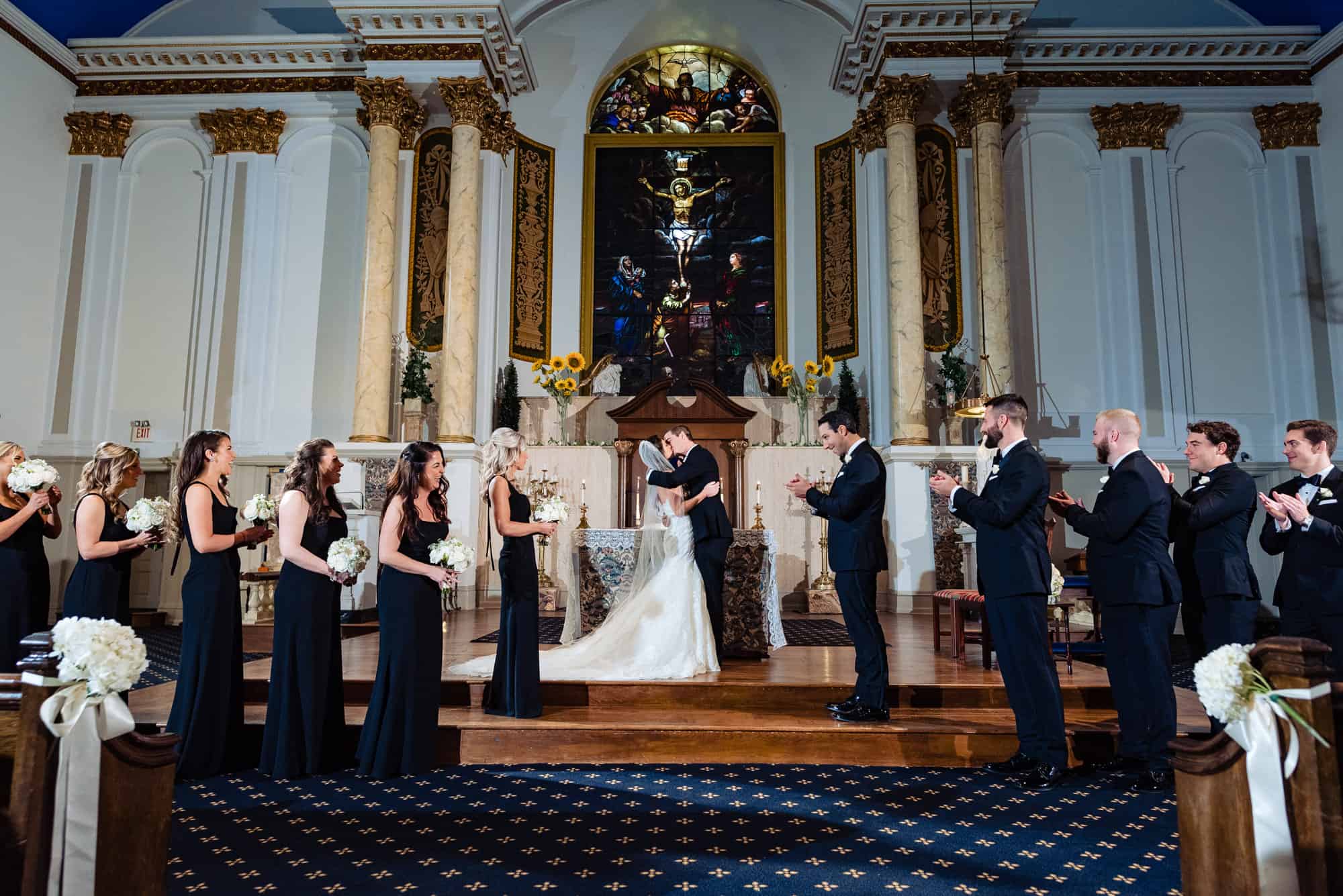
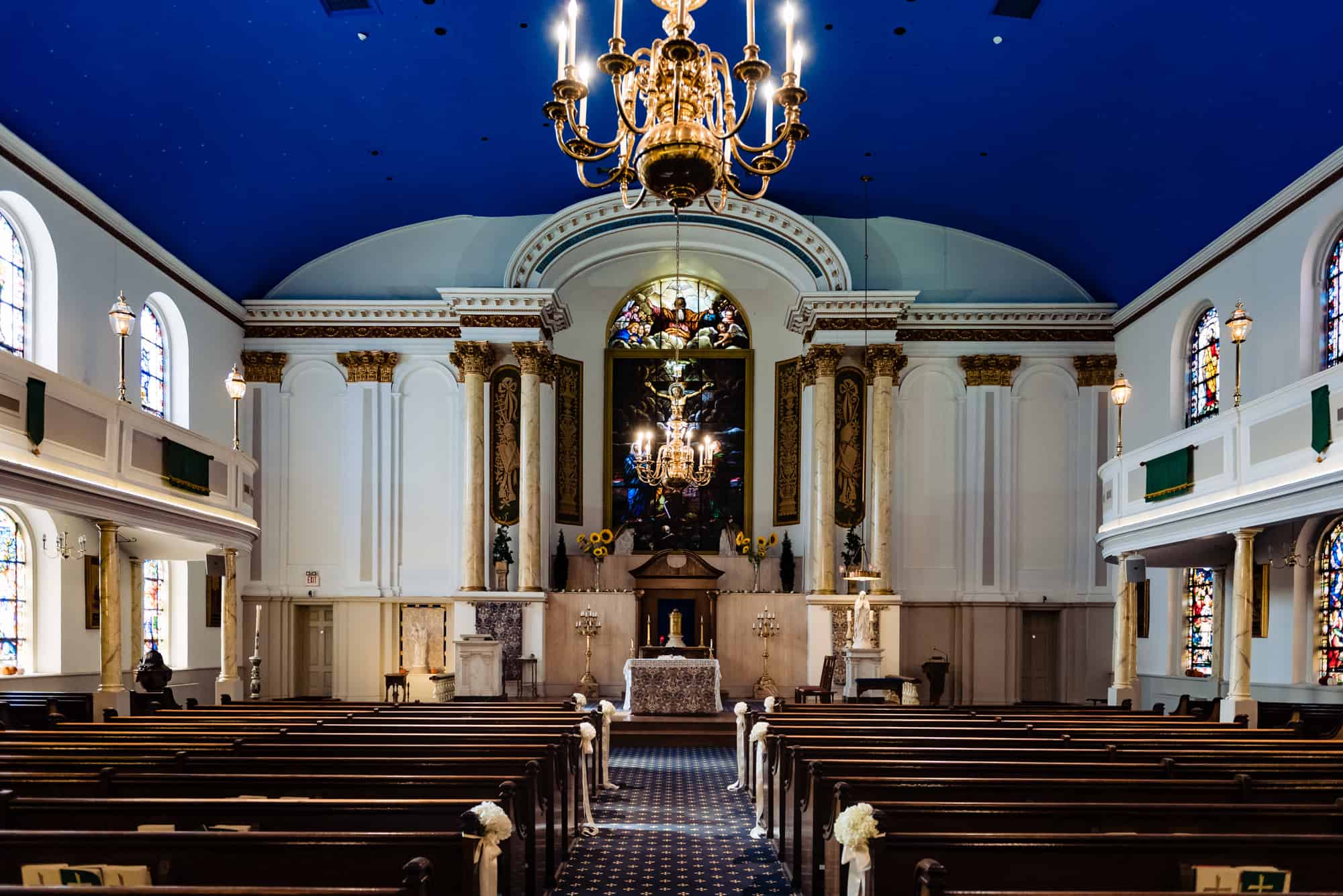
As a provision of William Penn’s Charter, Christ Church, the home of the American Episcopal Church, was established in 1695. It was known as “The Nation’s Church” because it housed members of the Continental Congress and Presidents George Washington and John Adams during the American Revolution during the first decade of the newly founded Republic.
The existing structure, which dates from 1744, has been called “America’s Episcopal greatest Early American church” and “one of America’s best Georgian structures.” Its steeple was designed by Robert Smith, one of America’s early architects. A lottery established by Benjamin Franklin financed it. The steeple made Christ Church the highest structure in North America for 56 years. Located at 20 N. American Street, the Christ Church, is a privately run historic property within Independence National Historical Park.

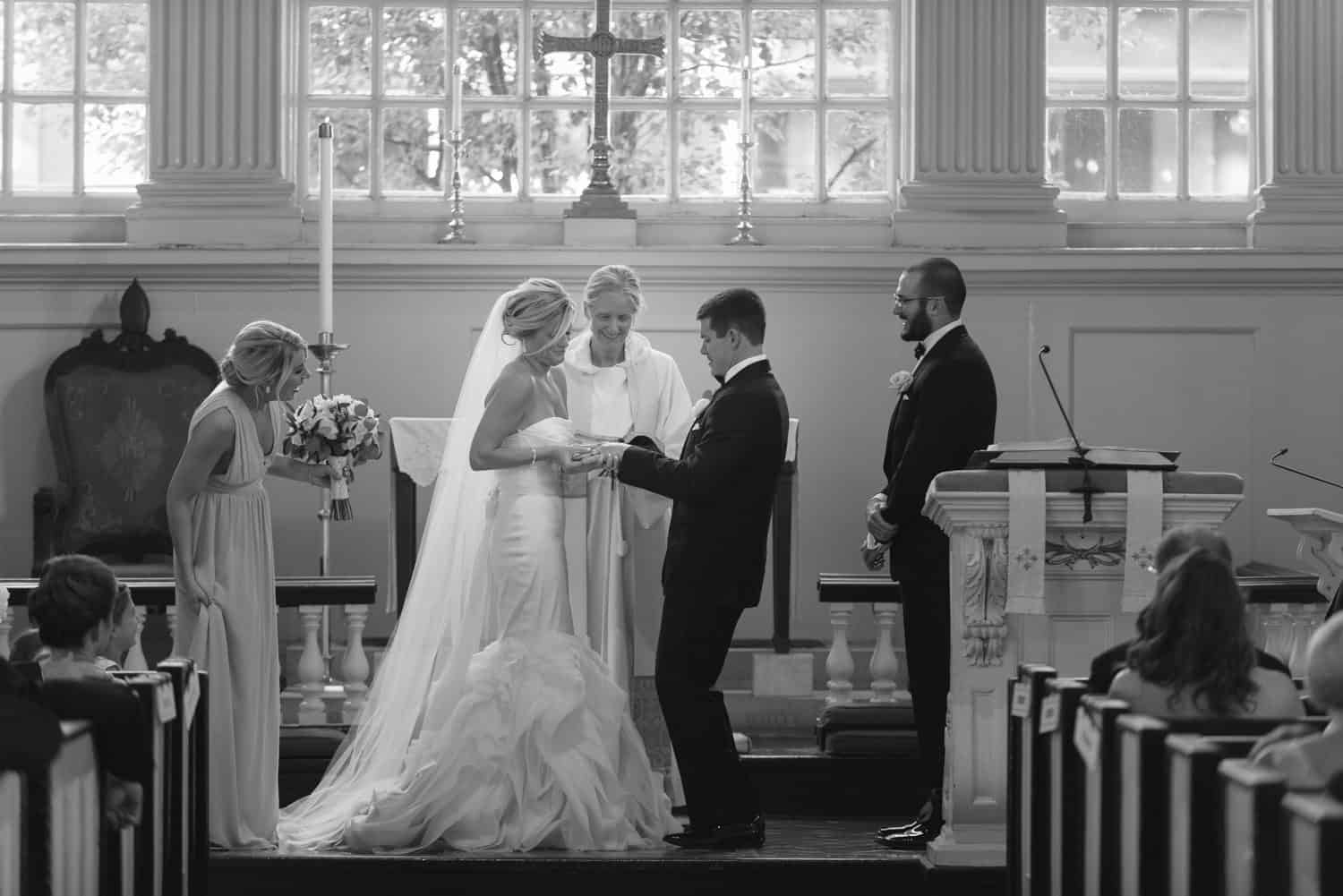

St. John the Evangelist Church
Saint John the Evangelist Catholic Church, also known as “St. John‘s” by its parishioners, is located at 21 South 13th St. at the heart of Center City. From 1838 to 1864, it served as the diocese’s cathedral. Located on 13th Street, just south of Market Street, this historic Gothic Revival parish church was completed in 1832. Most of its history has been spent with diocesan priests, but now it is staffed by Capuchins, a Franciscan order.
St. John the Evangelist has brought the Good News to Philadelphia for over 186 years. In addition, two canonized saints have ties to St. John’s, namely St. John Neumann and St. Katharine Drexel. In 1941, St. John established the Holy Redeemer Chinese Catholic Church as a mission chapel. They opened St. John’s Hospice 20 years later to serve people without homes.
St. John’s Parish Community was destroyed twice by fire. Furthermore, it served as a refuge for hungry children and adults in poverty and as the proto-cathedral for the Diocese of Philadelphia. St. John the Evangelist Church is one of Philadelphia’s Catholic churches, providing spiritual enrichment for locals, commuters, and visitors to the city.

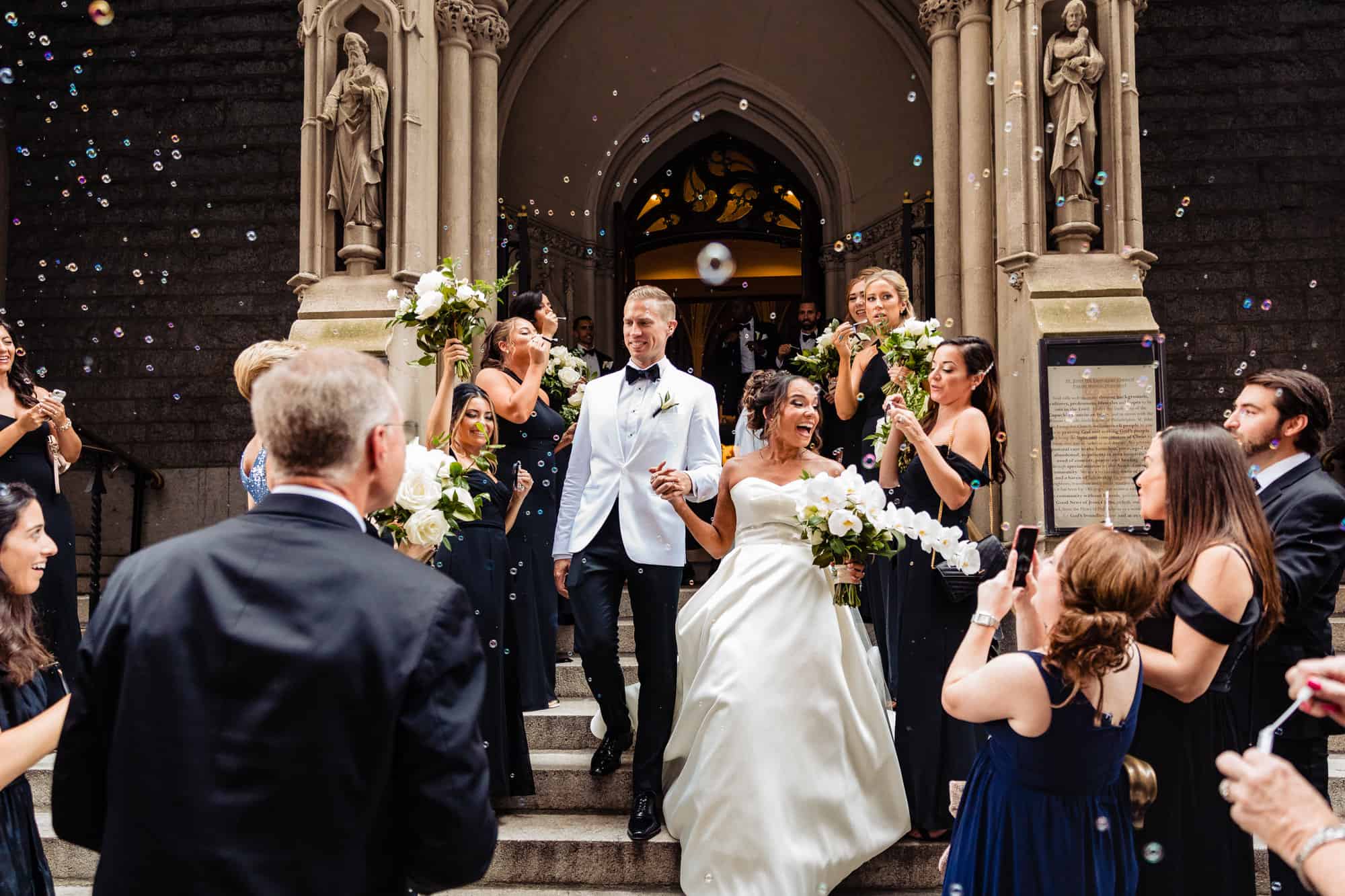

Weddings photographed at this church include:
Alicia and James, Kelly and Patrick
Old Saint Joseph’s Catholic Church
A Roman Catholic church founded in 1733, Old St. Joseph’s Church holds the honor of being Philadelphia’s oldest. It’s located at 321 Willings Alley, an unusual location that makes it practically impossible to see from the Street. According to one story, Benjamin Franklin asked Father Greaton to safeguard the church because religious bigotry was everyday in Quaker town. The church’s front wall is a party wall to a nearby structure; therefore, there is no way to get in.
Willings Alley still enters through a narrow arch with iron gates, leading to an unassuming courtyard that conceals the church’s true nature. Because there are unconnected buildings on either side of the church on Fourth and Walnut streets, the only access to the sanctuary is from the rear. St. Mary Interparochial Grade School is the official parochial school of Old St. Joseph’s Church.

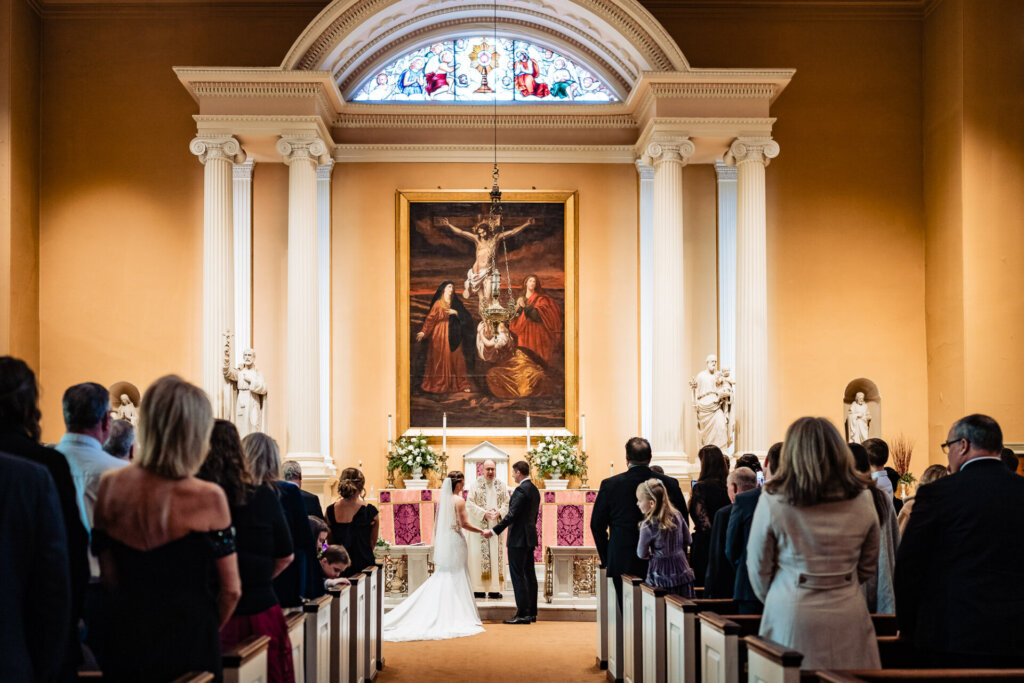
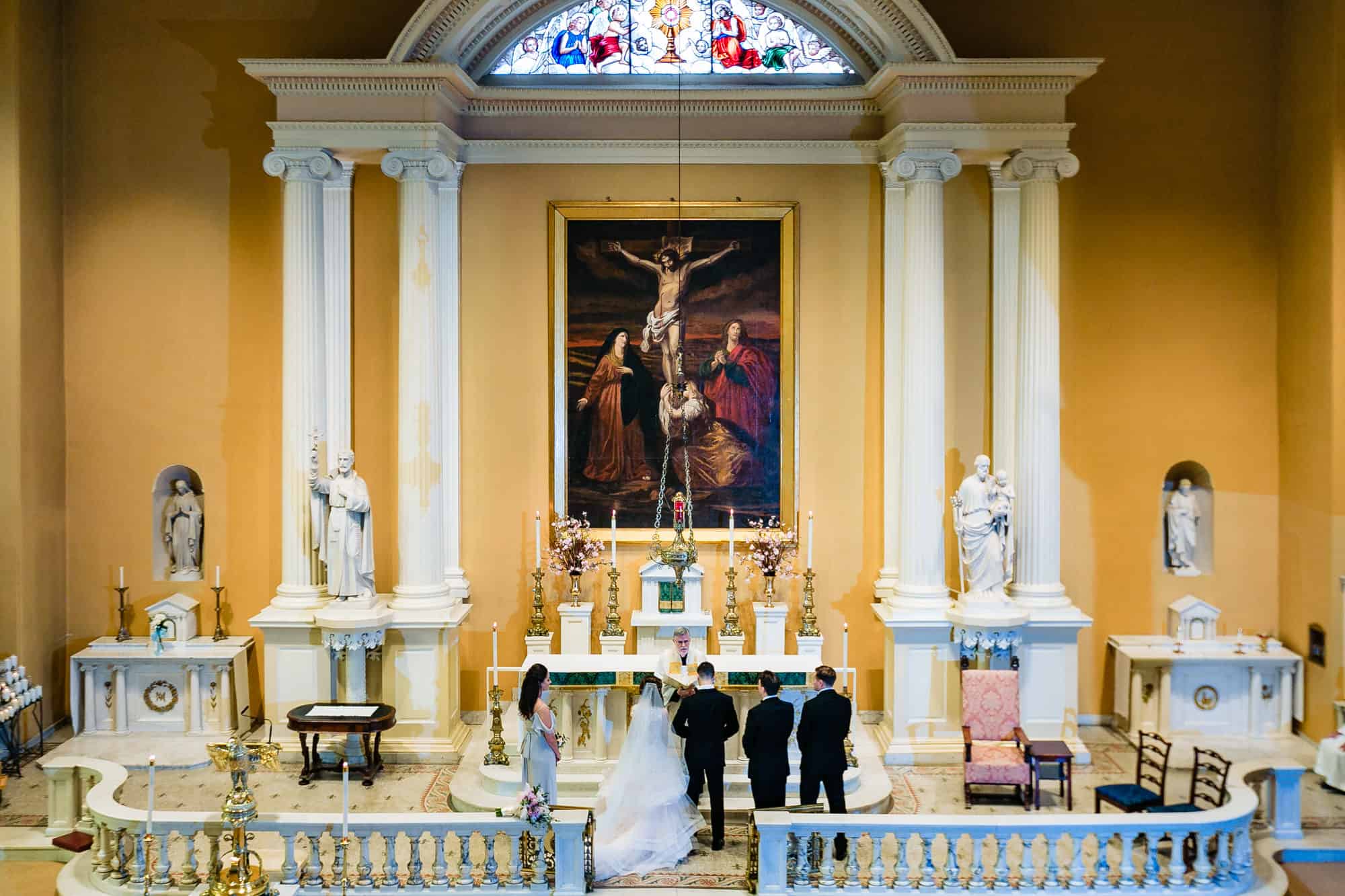
Recent wedding photographed here:
Tarryn & Connor
St. Patrick’s Roman Catholic Church
Located at 242 South 20th Street, near Rittenhouse Square, St. Patrick’s Church was founded in 1839 in response to a movement by Irish families in the west. Their work included unloading coal barges on the Schuylkill River and building houses on Manning Street. The neighborhood was called “The Village” or “Out Schuylkill” because it was reasonably far from the city center.
The first house on Rittenhouse Square itself wouldn’t be built until 1840 (the 1811 Walnut Street mansion that still stands today), thereby initiating the westward migration of wealthy families.
A local law clerk, Paul Reilly, lived in the house, which can be credited with the parish’s founding. His Catholic neighbors petitioned Bishop Kendrick immediately after he called them in 1839 to discuss forming a parish.
As Irishmen, they requested St. Patrick as the patron of their church. The bishop’s middle name, Patrick, also played a role in this appeal. As a result, he recently founded St. Francis Xavier church, which bears his name.
Aside from Vine Street, St. Patrick’s parish boundaries covered all of West Philadelphia as far as Overbrook and extended as far as Cape May in southern New Jersey.
The chapel underwent a significant renovation during the Marian Year of 1954, marking 100 years since Pope Pius IX proclaimed the Immaculate Conception Dogma. Due to the parish’s proximity to the square, famous faces have been spotted. Among them are John McShain Jr., Don Ameche, and Billy Cunningham.
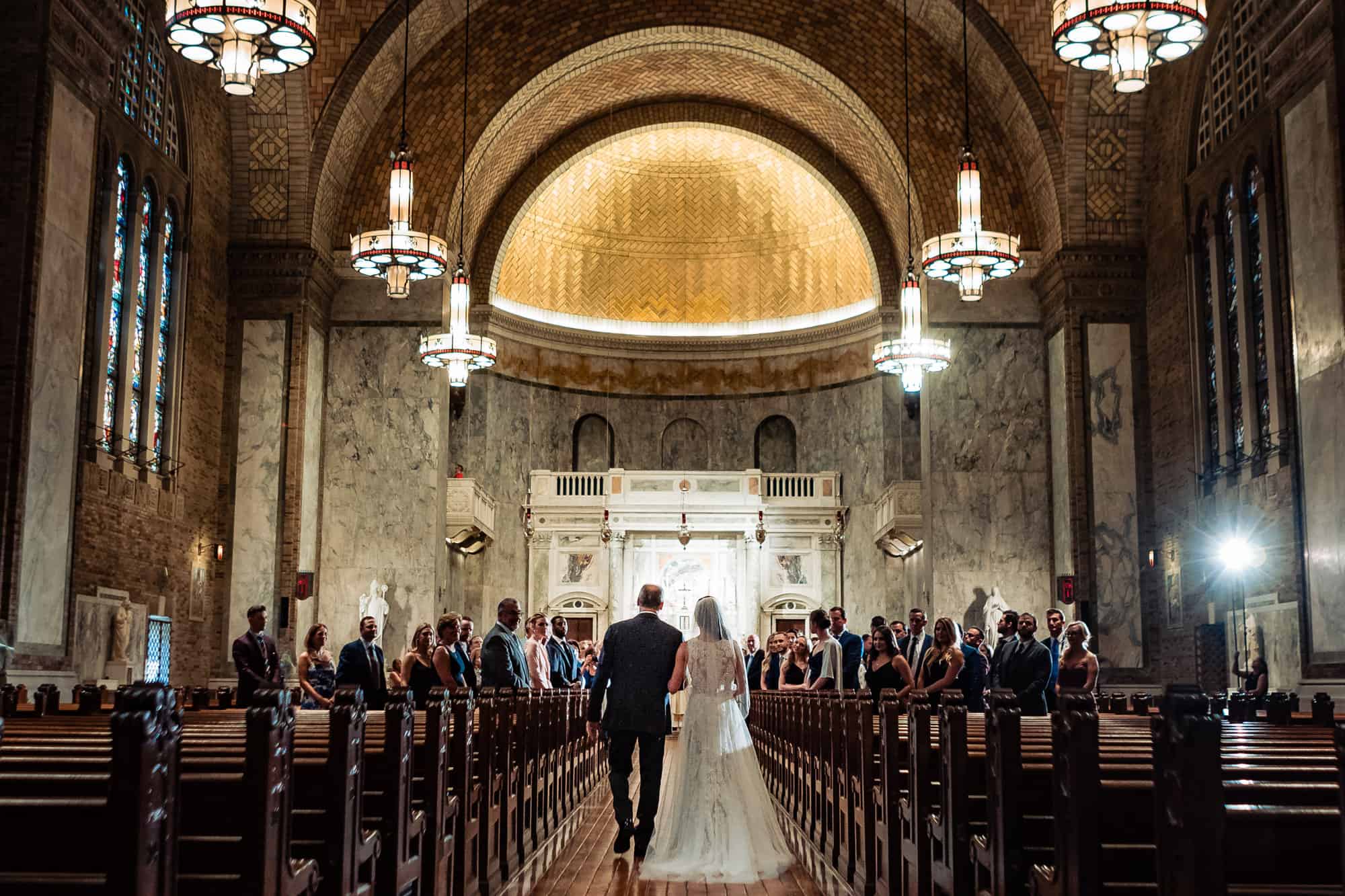
Inside, the church is stunning, and afternoon sunlight illuminates the stained-glass windows. Among the pews in the Lower Chapel are many Saints depicted in elaborate designs.

St. Augustine Church
The St. Augustine Church in 243 N. Lawrence St. was the first permanent residence of the Augustinian Order in the United States. Building funds for the original church on this site were provided by notables such as President George Washington, Commodore John Barry, and merchant Stephen Girard.
In 1796, Father Matthew J. Carr, O.S.A., founded St. Augustine’s to serve German and Irish immigrants settling in Philadelphia’s northern suburbs. Nicholas Fitzmaurice Fagan designed the church, which was among the largest in the city at the time.
William Strickland designed the bell tower, which was added in 1829. In 1811, Father Carr founded St. Augustine Academy at 247 Vine Street, one of the first Catholic secondary schools. The predecessor of Villanova University was St. Augustine Academy.
As with the Academy of Music and the Cathedral Basilica of Sts. Peter and Paul, the current church, was designed by Napoleon LeBrun in 1847. Filipino Americans in the Philadelphia area have long associated Saint Augustine Roman Catholic Church with devotion to the Santo Niño de Cebu, the Holy Child Jesus.
Several films have used the church’s interior and exterior, including The Sixth Sense, Shooter, and 21 Bridges. The church’s ceiling frescoes, painted by Nicola Monachesi in the mid-1800s, are the oldest in the United States.


St. Monica’s Church
The first Archbishop of St. Monica Parish saw a growing number of parishioners in the southern part of Philadelphia by the end of the 19th Century. The time had come for him to establish a parish there. Father Owen P. McManus, an assistant pastor at St. Theresa Church, was directed by the Archbishop to organize a new parish on Ritner Street between 17th and 18th streets.
St. Veronica church, originally located on Butler and 2nd Streets, was disassembled, moved across the city, and enlarged to seat 650. The chapel was completed in May 1895, and St. Monica Parish was born.
As the parish grew in the 1920s, it had more than 1,100 families. As a result, St. Richard’s Parish was founded in 1924 to serve those living south of Oregon Avenue. When the Great Depression struck in 1929, St. Monica was not spared, but never discouraged, and the priests persevered in helping those in need.
To prepare for the parish’s 50th-anniversary celebration, Father Farrell oversaw renovations to the school and church. It was in 1945 that St. Monica Kindergarten was established.
A special Liturgy for the St. Monica Diamond Jubilee was accompanied by the bells of St. Elizabeth Episcopal Church on January 18, 1970. Children at St. Monica School held a holiday a year after the Diamond Jubilee to honor Monsignor Farrell for his 40 years of service.
Unfortunately, a blaze engulfed St. Monica Church late that morning as firefighters tried in vain to extinguish it. Building walls was the only thing left standing after the fire destroyed virtually everything. A Pennsylvania State Historical Marker can be found in front of the church premises and honors its prize fighter, Tommy Loughran, a long-time resident of the neighborhood and parishioner of St. Monica Parish. This catholic church is located at 2422 South 17th Street.

St. George Greek Orthodox Cathedral
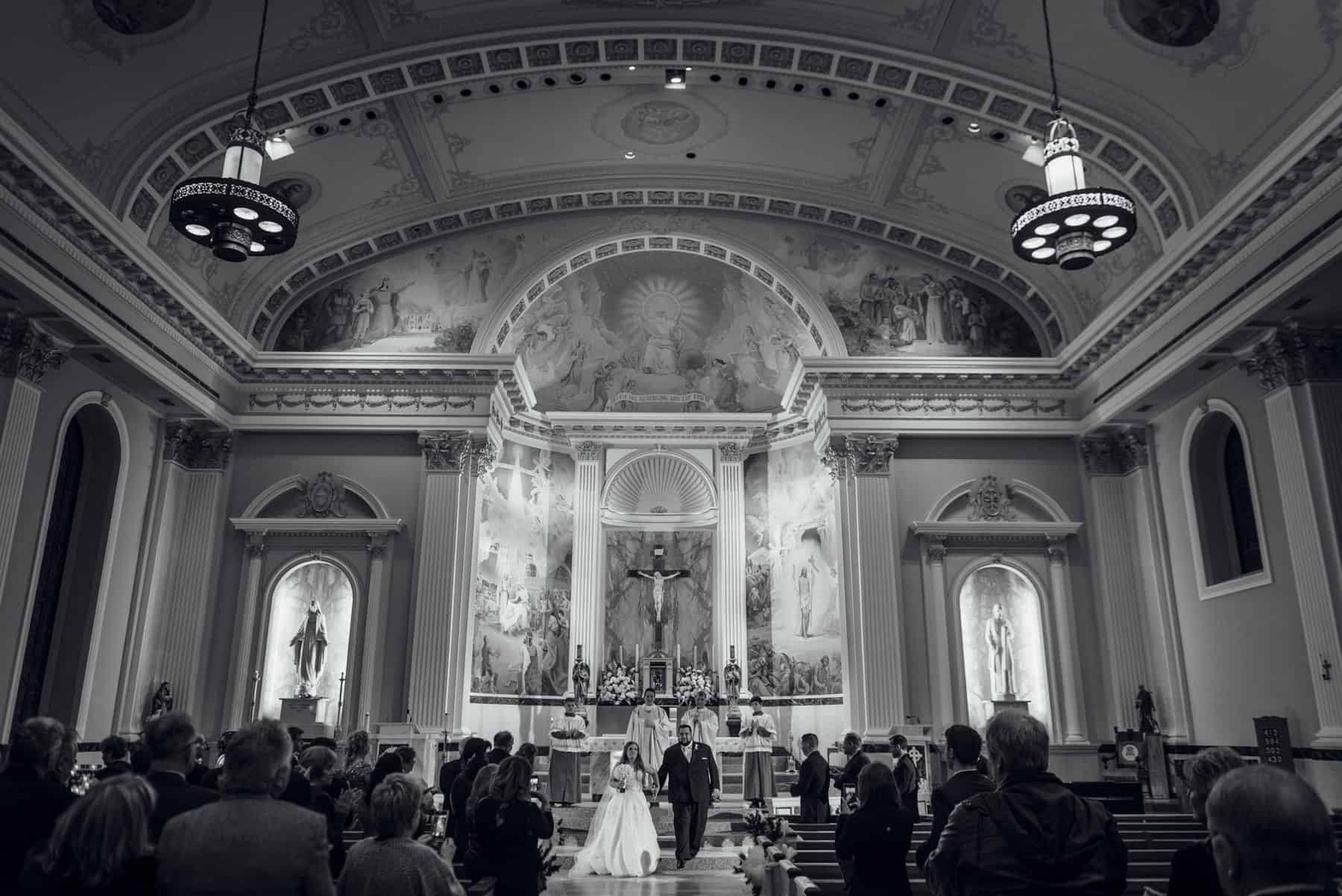
The St. George Cathedral is a historic church at 256 S 8th St. in downtown Philadelphia. Members of the Greek Orthodox community in the city recognized the need for a new church as the population grew. Founded in 1922, the Greek Orthodox Kathedrikos of St. George acquired the old St. Andrews church and renamed it after Saint George. The Society established a new church and continues to serve the Orthodox Christian community today.
Beginning in the early 1800s, the church’s religious and cultural history has been long and diverse. Although St. George’s is home to a Greek Orthodox congregation today, it was originally an Episcopal congregation.
Philadelphia’s steadily growing population in the early 1800s led to the formation of a new Episcopalian congregation. After raising funds for a new parish, John Haviland was commissioned to design St. Andrew’s Episcopal Church in 1822. Many famous landmarks in Philadelphia were designed by the renowned English architect John Haviland.
In 1972, Saint George celebrated its 150th anniversary. Several individuals sent letters of recognition, including President Richard Nixon, Vice President Spiro Agnew, and Pennsylvania Governor Milton Shapp. Many priests and bishops have been ordained at Saint George Cathedral over the years.


The Masonic Temple
The Masonic Temple, currently located at One North Broad Street, features ancient architecture adorned with antique details. The Grand Ballroom and majestic grand staircases make this classic wedding venue ideal for luxurious celebrations. With its rich, captivating setting, it will leave a lasting impression on you and your guests.
This building serves as the headquarters of the Grand Lodge of Pennsylvania, Free and Accepted Masons, located directly across from Philadelphia City Hall. Thousands of people visit the Temple each year to see the Pennsylvania Masonic Library and Museum, which has seven lodge rooms.
The Temple was added to the National Register of Historic Places in 1971. It was later designated a National Historic Landmark in 1985. During its landmark designation, it was cited as one of the nation’s most elaborate Masonic structures. Built in 1873, this National Historic Landmark is central to the City of Brotherly Love, making it the perfect wedding venue for any event.


See real weddings photographed at the Masonic Temple:
Camilla & Aengus, Santina & Bobby, Vicki & Ben
FAQs: Historic Churches in Philadelphia for Weddings
1. What special considerations come into play when choosing a historic church for our wedding?
2. How does the architecture of a historic church affect our photography timeline?
3. Are there restrictions on photography gear or poses inside historic churches?
4. How do we make sure we capture both the grandeur of the church and our personal, intimate moments?
5. What should we include in our wedding day plan when our ceremony is held in a historic church?
Let’s Create Your Once-In-A-Lifetime Wedding Images—Begin Your Experience Here